“REST EASY, MY FRIEND.” — WHEN WILLIE NELSON LET ONE LAST SONG SAY GOODBYE TO DOLLY PARTON
Introduction
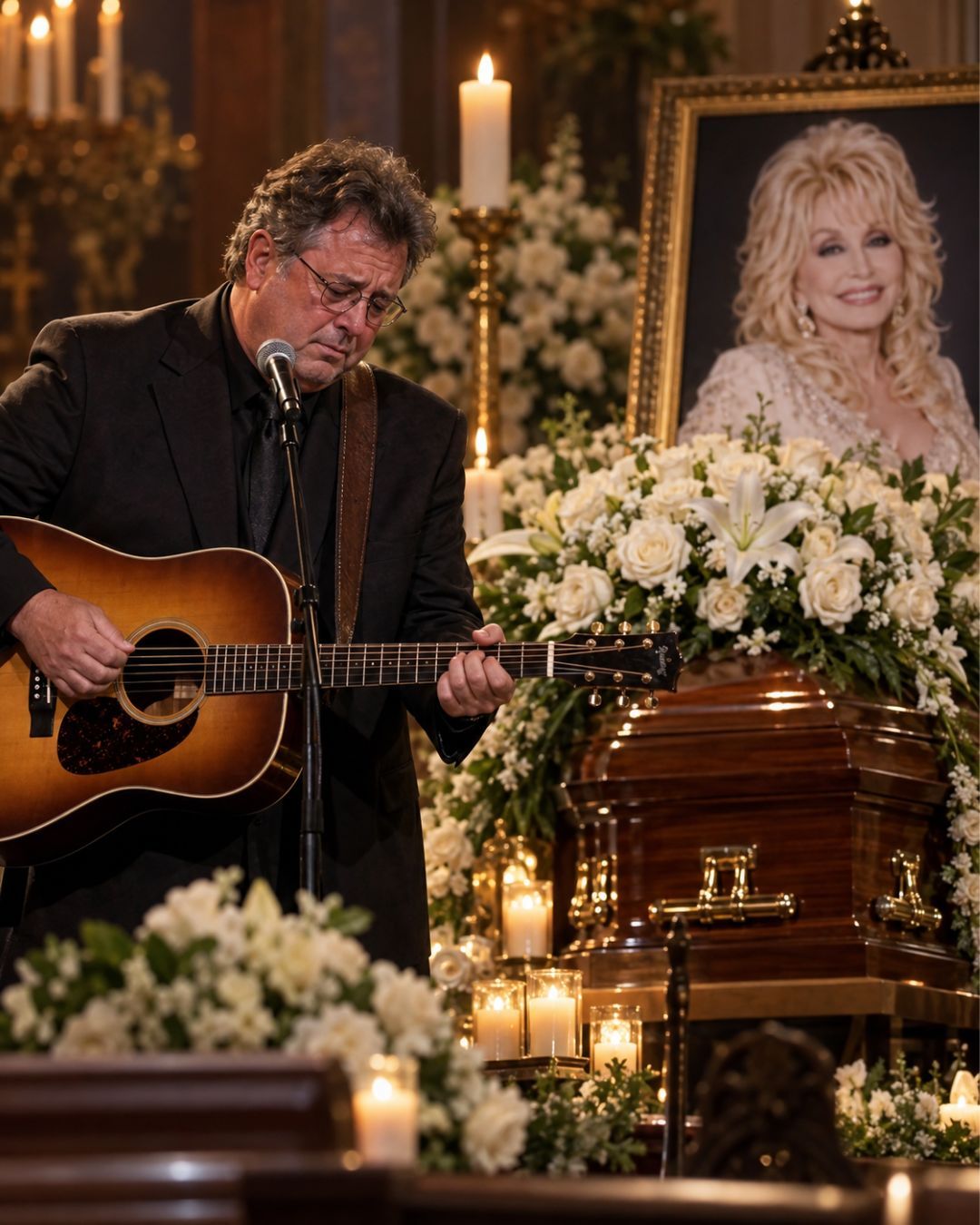
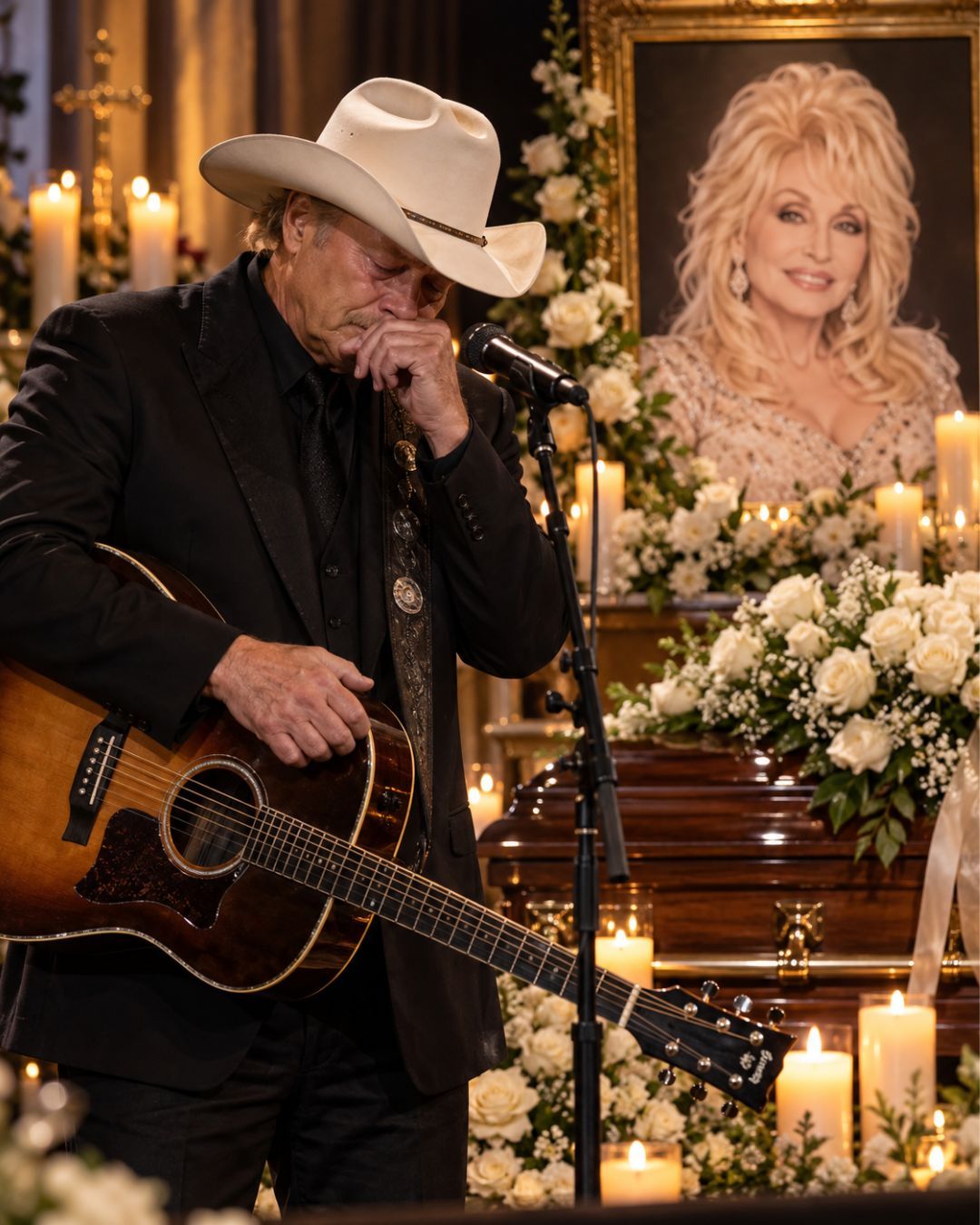
Some farewells arrive with speeches, standing ovations, and carefully prepared words. Others need almost nothing. A familiar guitar. A weathered voice. A few quiet chords. And one sentence spoken so softly that an entire room seems afraid to breathe afterward. That is the emotional heart of this imagined, dramatized tribute, “REST EASY, MY FRIEND.” — WILLIE NELSON’S FINAL SONG FOR DOLLY PARTON LEFT THE ROOM IN SILENCE 💔🎸.
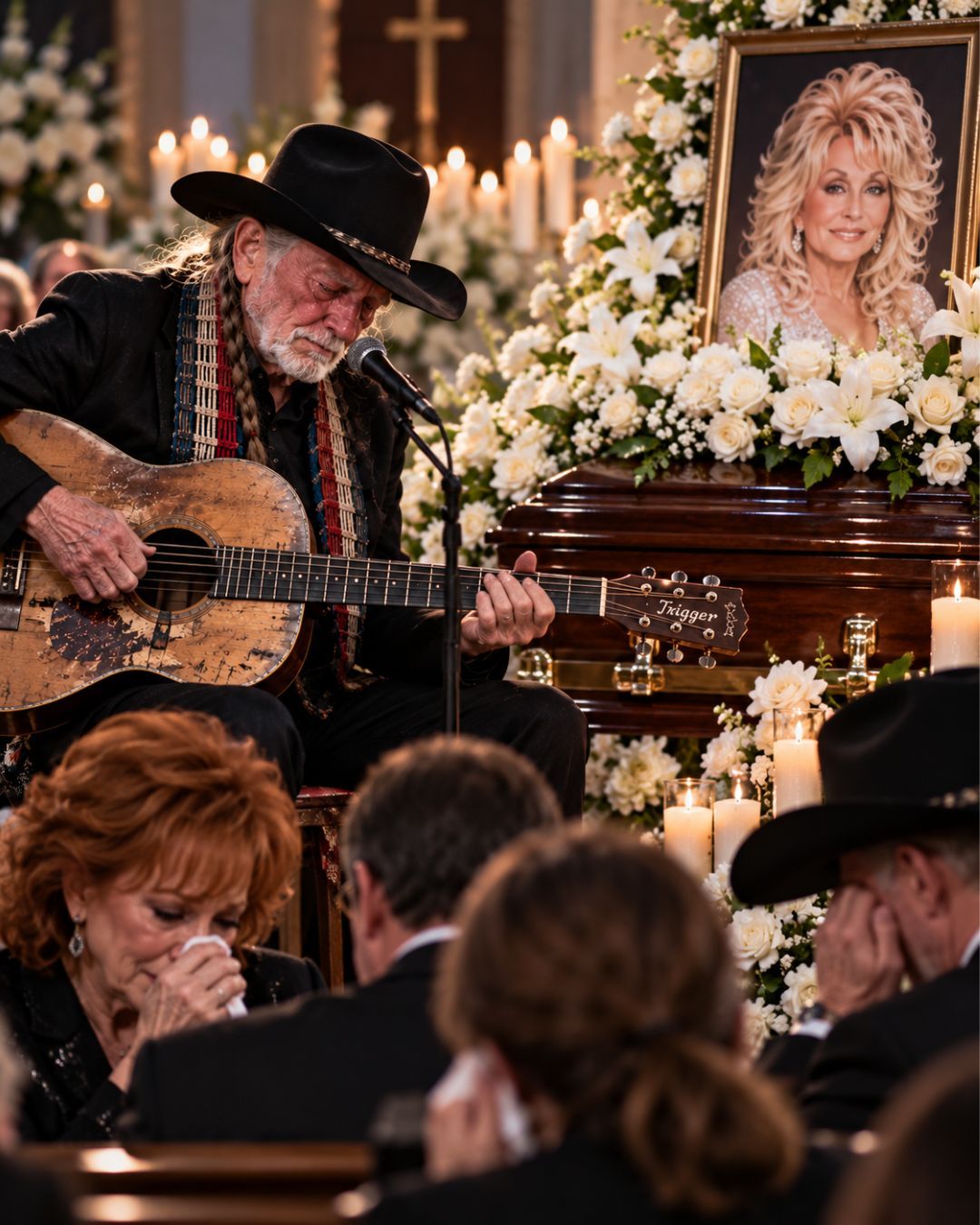
In this reflective scene, Willie Nelson sits beneath subdued lights with Trigger resting against him. There is no elaborate introduction and no attempt to turn grief into spectacle. Willie simply lowers his head, settles his hands around the guitar that has traveled with him through decades of American music, and begins “Always on My Mind.”
The choice feels almost painfully appropriate.
The song has always carried regret, affection, memory, and the realization that love is sometimes understood most clearly when time has already moved beyond our control. Sung here as an imagined farewell to Dolly Parton, those familiar words seem to acquire another lifetime of meaning.

Willie’s voice is not polished smooth by the years.
That is precisely why it matters.
Every rough edge seems to contain another highway, another stage, another backstage conversation, another friendship formed during an era when country music was being reshaped by artists who refused to sound like anyone else. Willie does not hurry through the melody. He allows the pauses to remain. The silence between phrases becomes nearly as important as the lyrics themselves.
And somewhere inside those pauses is Dolly Parton.
Dolly represented a different landscape within country music—the Smoky Mountains, family stories, faith, humor, hardship, generosity, and the stubborn belief that difficult beginnings did not have to determine where a life could go. Willie carried Texas independence and the restless freedom of the road. Dolly carried Tennessee mountains and home.
Different journeys.
The same devotion to being unmistakably themselves.

That connection gives the imagined performance its deeper emotional force. Willie is not simply singing for another famous artist. He seems to be remembering a friend and an entire chapter of American music that can never be recreated exactly as it was.
Then comes the final chord.
Willie lets it ring.
No one applauds immediately.
He rests one hand on Trigger, keeps his head lowered, and allows several long seconds to pass before quietly saying:
“Rest easy, my friend.”
Nothing more is needed.
Because by then, “Always on My Mind” has stopped feeling like a performance. It feels like a private conversation accidentally witnessed by a room full of people—one old friend, one battered guitar, and a lifetime of memories finding the only language large enough to say goodbye.